Thursday, May 2, 2013

Roses


We always have a variety of timeless classics and new rose varieties.

For more insight on what’s new in Roses, watch this presentation prepared by rose experts Sandy and Frank for the Greater Cincinnati Rose Society.

Deer Resistant Plants

Deer appreciate gardening efforts more than anyone else. :)
As you make planting plans, keep this list of Deer-Resistant Annuals and Perennials in mind.


ANNUALS

Ageratum
Alyssum
Asparagus Fern
Begonia
Brugmansia
Calla Lilly
California Poppy
Caster Bean
Celosia
Centaurea
Cleome
Cosmos
Dahlia
Datura
Dusty Miller
Foxglove
Gomphrena
Hypoestes
Ipomea
Lantana
Larkspur
Marigold
Matthiola (Stock)
Melampodium
Mirabilis
Morning Glory
Myosotis
Nasturtium
Nicotiana
Papaver (Poppy)
Pelargonium
Salvia (Blue)
Snapdragon
Solanum
Verbena
Zinnia


PERENNIALS

Achillea
Aconitum
Agastache
Alchemilla
Allium
Amsonia
Anemone
Anemonella
Aquilegia
Arabis
Arisaema
Artemisia
Asclepias
Aubretia
Baptisia
Bergenia
Brunnera
Buddleia
Centaurea
Ceratostigma
Cerastium
Chelone
Cimicifuga
Clematis
Colchicum
Convallaria
Coreopsis
Cyclamen
Delosperma
Dicentra
Digitalis
Dryopteris
Echinacea
Echinops
Epimedium
Eryngium
Eupatorium
Euphorbia
Gaillardia
Geranium
Geum
Grasses (most)
Gypsophila
Helianthus
Heliopsis
Helleborus
Hemerocallis
Heuchera
Hibiscus
Houttuynia
Iberis
Iris
Kniphofia
Lamium
Lavender
Leucanthemum
Liatris
Ligularia
Lilium
Limonium
Linum
Lobelia
Lupine
Lychnis
Matteuccia
Monarda
Myosotis
Narcissus
Nepeta
Oenothera
Pachysandra
Paeonia
Papaver
Perovskia
Physostegia
Polemonium
Poppy
Potentilla
Primula
Pulmonaria
Ranunculus
Rudbeckia
Salvia
Saponaria
Sedum (some)
Solidago
Sweet Woodruff
Tanecetum
Thalictrum
Thymus
Tiarella
Verbascum
Veronica
Wisteria
Yucca

Wednesday, March 7, 2012

Pansies


Pansies

Pansies, without question, are one of the most exciting plants of spring. I don't believe any other plant causes the excitement that pansies do. When people first see them in the spring, smiles are everywhere.
There are some who believe pansies need to be planted in the fall for spring bloom. We believe the best spring pansies are still planted in the spring. In most cases the fall pansies take so much longer to get going the following spring than fresh spring plants. I won't say fall plantings don't work for spring, but generally spring planting is more successful. There is no difference in the varieties, it's just when they are planted. Also, the term "winter" pansy is a marketing concept. All pansies are cold tolerant. Some varieties of pansies, however, have been hybridized to be more heat tolerant to last longer into the warm season.
Pansies love cool weather and snow does not hurt them. (Actually when they are covered in snow, do not brush off the snow.) As soon as the soil is thawed from winter they can be planted. Most years in the tristate area, this usually is in March, although I remember some Februaries when this was do-able.
As you take them out of the pot to plant, it's best to loosen the roots. Plant them level in the soil of your container or in the bed and water them in well. After they're planted, sometimes when springs are unusually cool, it's difficult to tell if the soil is truly wet or if it's just cold soil. Probably the soil is dry if you haven't watered too recently, so go ahead and water well. Pansies do get thirsty, so be sure to check them; however they need to be dry between watering's.
Pansies don't require a lot of fertilizer but occasionally fertilizing with Jack's All Purpose is great!
Dead-heading is not necessary but it does help them to look fresher. Sometimes, if the season is unusually warm, dead-heading will prolong the bloom time. It does curb the build up of seed pods. If annuals believe they have produced enough seed they sometimes feel they don't have to bloom any longer; they've done their job! Personally, I dead-head my pansies twice a season.
Panolas are a relatively new hybrid, a cross between a pansy and a viola. They have a high bloom count like violas with a gorgeous color spectrum like pansies. The blossoms are medium size and there are lots of them. Panolas are great because they are very showy and full of color. A.J. Rahn Greenhouses carries this new variety as well as a full color complement of pansies and violas.

Wednesday, November 30, 2011

Cyclamen


Cyclamen persicum

Cyclamen are among the most beautiful and popular flowering plants. This winter blooming houseplant with butterfly shaped blooms comes in a range of colors, from Christmas reds, electric fuchsia pink, maroons and purples, to a very bright white. They have equally attractive variegated heart shaped leaves in deep green. They prefer bright light and a cool location such as a windowsill, and should only be watered when the top of the soil is dry to the touch. With proper care, cyclamen can bloom for up to four months.
In the spring, the plant can be moved outdoors to a semi shaded spot and watered occasionally. When it begins to show new growth in August, begin fertilizing it and watering more frequently. Move the plant indoors before the first frost and continue it's care indoors in a bright, cool location. Blooms will begin again in late November.

By: Sandy Weinkam
A.J. Rahn Greenhouses

Tuesday, November 1, 2011

Vanda Orchids


Vanda Orchid

Of the many varieties of orchid species, the Vanda is one of the easiest to grow, and has one of the most long lasting blooms. Flower colors range from vivid purple to bright fuchsia, yellows and reds, and even bright blue as seen in the photo above. Some are very fragrant, and the bloom time is quite long. Foliage is strap like green leaves growing in layers opposite each other.
Vanda Orchids are, of course, tropical, and love high humidity, bright but not direct sunlight, and thrive best when they receive proper air circulation. They do not excel in a crowded wet space and will pick up many diseases and insect pests if left in this situation. Water when the surface is dry to the touch, less in winter or after repotting, more frequently during spring and summer when they will really put on lots of growth. They are heavy feeders during the growing season, preferring a balanced formula fertilizer of 20-20-20. Follow directions on your fertilizer for frequency of application. If fertilized with too high a nitrogen content, they may not bloom for you. To increase humidity around your orchid, try misting the foliage every morning. This allows the foliage to dry off before dark, thus avoiding possible fungal problems.
Once you have the optimum conditions for your Vanda, sit back and enjoy the beautiful display it offers you.

By: Sandy Weinkam
A.J. Rahn Greenhouses

Thursday, September 15, 2011

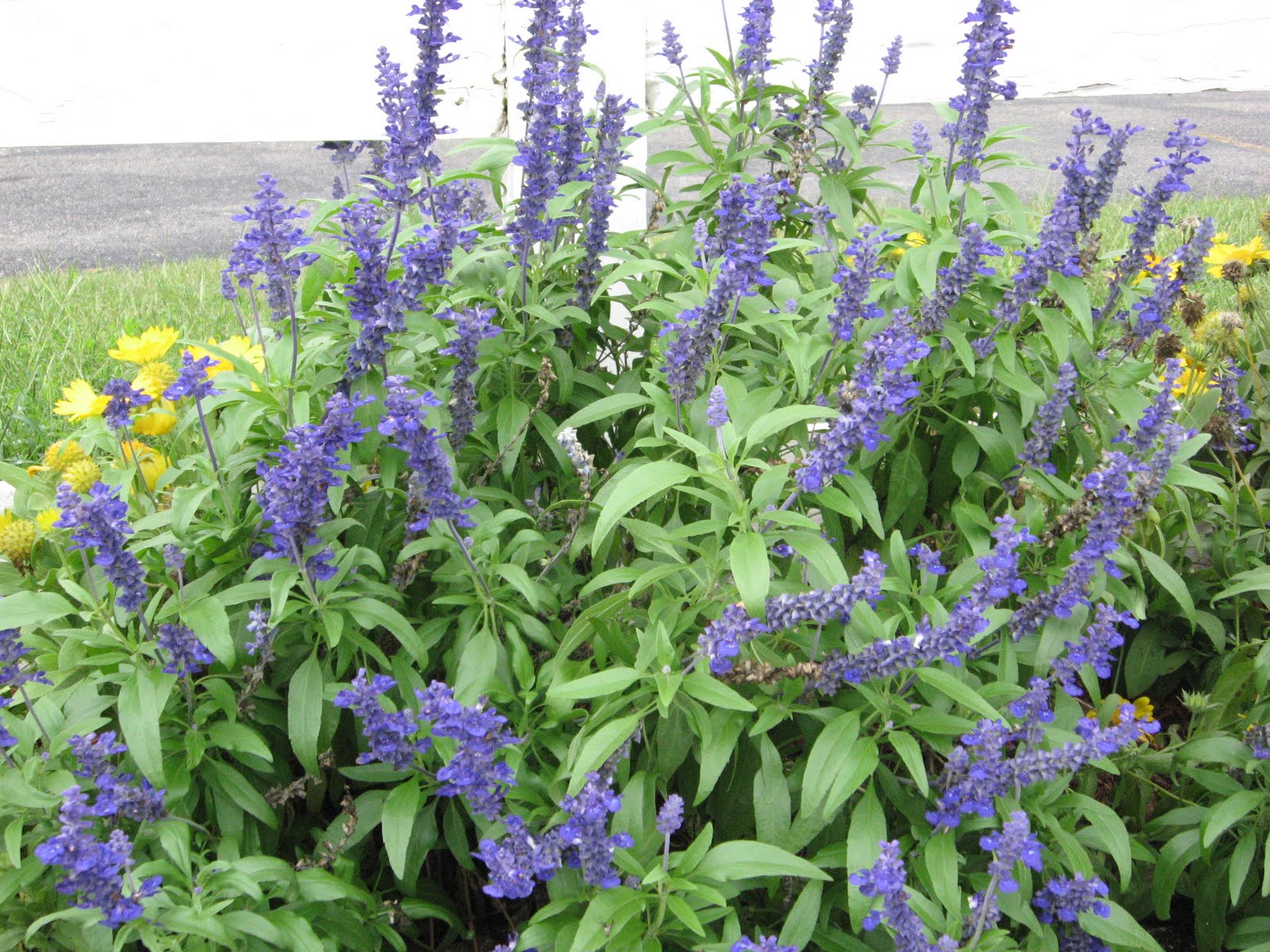
Annual Blue Salvia


Blue Salvia
Salvia farinacea 'Victoria Blue'

Annual Salvia makes an attractive display in your garden or container and comes in a variety of colors. All have the same general characteristics and likes and dislikes. I will refer to only the blue Salvia pictured above, which has been thriving all summer outside our greenhouse complimented by yellow Gaillardia.
The Victoria Blue Salvia pictured is a true blue color which is a highly sought color in many gardens. It grows 18-24" tall and wide, and the flower spikes can be as long as 8-10". The gray green foliage complements the flowers nicely, and this plant once established is quite drought resistant. Planted in a sunny location in well drained soil, this annual will provide you with masses of color all summer long and well into the fall. As with all annuals, fertilization at least once a week will keep them looking outstanding.
These beautiful blue flowers are very attractive to butterflies and hummingbirds, but not at all to deer, and do not have to be deadheaded to continue flowering. They really do stand out strikingly in the middle of a container planter with Lantana, Lysimachia, or Calibrachoa around the outside. For easy care, deer resistant, continuous blooming, bright blue color in your gardens or containers next year, try this variety and be amazed at the compliments you get from the neighbors.

By: Sandy Weinkam
A.J. Rahn Greenhouses

Friday, September 2, 2011

Annual Lantana


Lantana

Lantana plants are grown as annuals in zones 1-7, where they are quite prolific bloomers all summer long in full sun. They are very drought tolerant once established, and not picky about soil type as long as it is well drained. They come in a range of colors from reds, yellows and oranges, to pink, rose and lavender. For full plants with lots of blooms all summer, fertilize every week with a general purpose fertilizer, or a bloom booster formula.
These hard working, long blooming plants can be used as specimen plants, in containers, planted in masses, or some varieties are trailing and look great in hanging baskets. We have both varieties growing at the greenhouse, some in window boxes, others planted in flowing masses in our entrance garden and they are thriving! They attract lots of butterflies, but deer will avoid these plants completely, preferring more tender and tasty plants than Lantana. Customers who have fairly large herds grazing in their yards have told us the deer won't touch these plants, helping hold down frustration levels for our avid gardeners.

By: Sandy Weinkam
A.J. Rahn Greenhouses

Thursday, August 25, 2011

Cone Flower


Cone Flower
Echinacea

A real workhorse perennial in the garden, the coneflower will continuously bloom from late June until frost. New varieties now come in colors other than purple, ranging from many shades of yellow, pink to red, chartreuse, and shades of orange, as well as white. My favorite combination in terms of variety name, are the red Tomato Soup, and the very yellow Macaroni and Cheese. They sound good enough to eat! Height ranges vary from very short 6-8" varieties, to 18-24" types, making them very versatile in front or in the back of your perennial bed.
Cone flowers thrive in full sun, are very drought resistant once established, and faithfully return every spring fuller than the year before. Treated with a slow release fertilizer in early spring, your cone flower plant will be even more colorful and full than it would be if just left alone. They aren't picky about soil and will grow in most any type you may have, but as with all plants, do better in a richer well drained soil. Side dressings of compost in early spring will achieve both a better soil consistency and provide fertilizer at the same time! When establishing a new plant, keep it watered when dry until it really gets its roots set. This may take an entire season to accomplish, but well worth it for a very strong plant for many years to come.
Finches love the seeds in the center cone of these flowers, so don't deadhead them too soon, giving the birds a chance for a fresh treat. As with all fuzzy leafed plants, deer won't munch on them.

By: Sandy Weinkam
A.J. Rahn Greenhouses

Tuesday, August 16, 2011

August Lily


August Lily
Lycorus

The August Lily, blooming now in many gardens, has many common names by which it is known, depending on what part of the country it is growing in. Known as the Surprise Lily, the Magic Lily, the Naked Lily, or the Assumption Lily, as well as August Lily, this hardy bulb is very long lived. In my own father's garden, this flower has been showing off every year since he was a small boy, and he is now 86 years old! Each year the clumps multiply with more flowers, yet never take over and crowd out other plants.
In early spring, deep green strap-like foliage appears for 6-8 weeks, then dies completely to the ground. Not until early August do you see any activity in the soil where the foliage was, then almost like magic, the leafless 24" stem of the flower stalk appears, taking only about a week to reach full size and bloom! On each flower stalk are up to 8 lily like pink-lavender outward facing flowers. These will bloom for up to three weeks if the weather isn't too hot. They prefer sun to part sun, and may not bloom for a year or two if they are moved. Soil fertility doesn't seem to affect flowering, nor does fertilization seem to make a huge difference. Best of all they are deer and rodent resistant!
For years of easy care, beautiful flowers each August, this bulb is an excellent choice!

By: Sandy Weinkam
A.J. Rahn Greenhouses

Monday, August 8, 2011

Perennial Coreopsis


Coreopsis
Tickseed

Coreopsis is a native North American plant that will grow and flourish in even the least fertile area of your sunny perennial garden. With its cheery yellow flowers, this plant will bring many delightful summer months of color. Newer cultivars also come in a variety of lighter yellows, shades of lavender, and the newest ones in deep yellow with burgundy red eyes.
This native species thrives in full sun and blooms all summer until frost. Once established it is very drought resistant, and will do best in fairly good soil with some fertilizer in early spring. Some species can be as tall as 3', while others may only reach 8-12". Foliage is of two types. The threadleaf varieties have a very ferny type foliage and tend to be shorter and more spreading in their habit, for instance the Moonbeam Coreopsis. The grandiflora types have a more upright habit with stiffer leaves that are deep green and pointed. The variety pictured is Jethro Tull, a grandiflora type with fluted petals that is very floriferous. The flowers are very attractive to butterflies, but not at all to deer, a real plus with our exploding deer population! When they begin to outgrow their space, you can split the plants in early spring and either share them with neighbors, or find a spot in another garden of your own that could use more bright summer color.

By: Sandy Weinkam
A.J. Rahn Greenhouses

Monday, August 1, 2011

Giant Elephant Ear


Giant Elephant Ear
Colocasia gigantea

For a truly car stopping, eye popping plant to grow in your garden, try this tropical monster plant from Thailand! These plants can grow 6-10' tall in a single season, and they get their name from their resemblance in size and shape to an elephant's ear. The leaves can reach proportions of 5'x4', and are rounded and a beautiful blue green color. As you can see from the picture, it has a bloom that is much like the bloom of a peace lily, though much, much larger.
This bulb plant prefers a shady to part shady location with ample room and some wind protection. Provide an acidic, well drained soil for optimum conditions for massive growth. Water this plant often, not allowing it to dry out between waterings, and fertilize at least once a week with a high nitrogen fertilizer. Grown here in Cincinnati, this plant will not survive the winter outside, but before the first frost you can cut it back, dig it up and dry the bulb, then keep it in a cool dry place for the winter, or you can keep it in a large pot inside. Beware though, as you will need lots of room if you plan on growing it through the winter. You can get a head start on the new season by starting the bulb in a pot inside in early spring, then after danger of frost, replant it in your garden for another spectacular summer!

By: Sandy Weinkam
A.J. Rahn Greenhouses

Wednesday, July 27, 2011

Black Eyed Susan


Black Eyed Susan
Rudbeckia

The Black Eyed Susan is a staple in the perennial garden, and shows off loads of blooms and color every summer. An extremely hardy perennial, the Black Eyed Susan is not fussy about soil conditions, and is very drought resistant once established. Planted in full sun, these plants will bloom well into fall with little or no care.
A dose of slow release fertilizer in spring will be greatly appreciated, and occasional watering in drought conditions will keep these cheery yellow flowers coming back stronger every year. When the planting gets too large for it's space, divide the plant in spring when it begins to reappear, then trade with a neighbor for some plant they may be dividing, or just share yours. What a wonderful way to be neighborly, and perhaps add a new perennial to your own collection! Best of all, these plants are deer resistant, but keep in mind deer may try anything if they are desperate. Paired with purple coneflower, these two make wonderful taller backdrops in your perennial garden.

By: Sandy Weinkam
A.J. Rahn Greenhouses

Tuesday, July 19, 2011

Butterfly Bush


Butterfly Bush
Buddleia

The Butterfly Bush is one of the hardiest and most prolific of all summer blooming shrubs. It would be an easy care addition to any garden, especially if you want to attract a wide variety of butterflies throughout the summer. Flowers come in many colors, primarily various shades of reds and blue- violets, but also include a variety called Bicolor, that is light violet and orange on the same bloom. The long flower panicles, some as long as 12 inches, are also very fragrant. Heights range from the dwarf 'Lo and Behold' at a mature height of 2-3 feet, to the very tall 'Royal Red' at 8-10 feet. Most varieties average about 6 feet, and all are very amenable to heavy pruning, so you can keep them in bounds in your own garden if you so desire.
These shrubs grow best in full sun, are not picky about soil, but like all perennials thrive in better soil. Once established, these woody shrubs are also very drought tolerant, though they will need watering more often the first year if rain is lacking in your area. A slow release fertilizer applied in spring will be most appreciated by your specimen, giving it a head start on vigor for the summer ahead.
While these bushes attract many species of butterflies, they also bring hummingbirds to your garden as well, while deer are not attracted at all. For an easy care, fragrant, beautiful addition to your perennial garden, these shrubs are a great choice.

By: Sandy Weinkam
A.J. Rahn Greenhouses

Monday, July 11, 2011

Perennial Hibiscus


Perennial Hibiscus

Just coming into bloom now is the huge, gorgeous perennial hibiscus in colors ranging from Fireball red , to Sultry Kiss hot pink, to Pink Elephant Ear (almost as huge as an elephant's ear!), to the one pictured, Blue River II. These flowers can be as wide in diameter as a dinner plate, 10 to 12" across. Even though each flower only lasts one day, there are a plethora of buds that continue to form and open well into August. For curbside attraction, these beauties can't be beat.
Hibiscus are not too picky about care once they are established. Plant them in full sun, in well drained soil, then watch them take off. A side dressing of slow release fertilizer in spring will be welcomed, but they will thrive without fertilizer as well. In cases of severe lack of rainfall you may need to supplement water, but for the most part these plants are carefree and don't seem to be affected by insects. Each winter they die back to the ground, and each late spring they reappear with multiple stems, adding more stems with each passing year.
Varieties range in height from 3' to 6 or 7', and will get a diameter of 3 to 4 feet around with age. Hummingbirds love this flower, and will return year after year to dine on it's nectar. For eye-popping appeal and hummingbird attraction this easy care perennial can't be beat!

Sandy Weinkam
A.J. Rahn Greenhouses

Monday, July 4, 2011

Roses Mid Summer Care


Rose Care

Now that we are in the midst of summer heat and humidity, there are a few helpful tips that will pull your roses through to fall with flying colors. As you probably know, roses really prefer cool, low humidity areas to show off their best form. You've noticed, I'm sure, how beautiful, vibrant and prolific the blooms are in the spring, but as soon as the temperatures rise to high 80's and 90's, fewer and smaller, and sometimes faded or different color blooms appear. Blackspot and mildew begin to creep onto the lower leaves, turning them yellow and causing the plant to begin to defoliate.
There are several proactive steps you can take to prevent, or if it's already started, to arrest the process. First and foremost is to make sure your bushes are not crowded and are getting plenty of circulation around their bases. Second and just as important is to make sure your roses are well watered and fed regularly, being careful not to get the foliage wet. A robust healthy rose bush is less apt to succumb to disease and insects if taken care of. Third, a regular regimen of spraying with a fungicide once the weather gets hot and humid will go a long way toward keeping fungi under control. If the blackspot doesn't have a chance to get started, you won't have to spend as much time fighting it off.
If you do have the start of blackspot, be sure to clean all the dead and dying leaves from on and around your bushes and place them in the trash not in your compost. Fungal spores can live for years before they reinfect plants, so remove them permanently. After you have cleaned on and around your plants, wait until late in the evening just before sunset to spray your fungicide so you don't burn the foliage. As long as it doesn't rain, you won't have to spray again for two or three weeks. A continuous program of spray throughout the summer, however, will assure your plants of being healthy going into the fall and winter. (Knock Out Roses seem to withstand most fungal problems, but have been known to get mildew, another fungal disease.)
Don't forget, roses need at least 2" of rain a week, so about twice a week water them well if it hasn't rained much, and they will reward you with a summer and fall of continuous gorgeous blooms!

By: Sandy Weinkam
A.J. Rahn Greenhouses

Wednesday, June 1, 2011

Ostrich Ferns


Ostrich Fern
Matteuccia struthiopteris

The Ostrich Fern is a big, bold, beautiful dark green fern with large fronds that can reach 4-5 feet at maturity! With their very large size and vase shaped growth habit, these ferns can make quite a statement as a background plant in your shade garden, or as a specimen plant, or to naturalize in a dappled shade area of your yard. One caution to share is that they are aggressive spreaders, sending out underground runners, and you may find you will have more than enough plants to share after two or three years.
The Ostrich Fern thrives in humus rich, moist soil, but mine have had no problem in just decent composted soil. Adding sphagnum peat to your soil if it is too sandy or full of clay will go a long way towards making them happy. A general purpose slow release fertilizer once in spring is more than adequate to ensure maximum growth in these easy to grow ferns. They prefer part to full shade, but will accommodate some sun if watered more frequently. Best of all, in our ever exploding deer population, you won't find a single nibble taken from these wonderful ferns!

By: Sandy Weinkam
A.J. Rahn Greenhouses

Sunday, May 15, 2011

Miss Kim Lilac


Miss Kim Lilac
Syringa patula 'Miss Kim'

The Miss Kim Lilac is one of the best dwarf lilac shrubs to find space for in your smaller garden landscape plan. The compact, upright, rounded habit is perfect for those less expansive spaces you may be trying to fill. Their very fragrant, light lavender flowers in spring will fill your senses with a most pleasant fragrance for up to two or three weeks dependent on weather conditions. The dark green glossy foliage makes an excellent backdrop to the lavender flowers, and as an added bonus, in fall the foliage becomes a beautiful deep burgundy red.
Miss Kim thrives in full sun, but will tolerate partial shade at the expense of bloom numbers. Well drained soil is best, but this variety will adapt to most soils. Fertilize in early spring with a general purpose fertilizer, then again after blooming to ensure a plentiful bloom for the following spring. This variety, once established, is also drought tolerant. Prune after blooming is finished if you must prune at all, to allow the following spring's blooms to form all summer. Pruning in fall or early spring is not recommended as this will cause you to cut off the flower crop still to come. Miss Kim is also very mildew resistant unlike the common lilac. One final plus to finding a place in your landscape plan for this fragrant beauty is that deer do not seem interested in pruning this shrub for you.

By: Sandy Weinkam
A.J. Rahn Greenhouses

Wednesday, May 4, 2011

German Bearded Iris


German Bearded Iris

German Bearded Iris are very easy to grow and come in a rainbow of colors. Some are single in color, others are bi color in blues, reds, white, yellows and pinks as well as lavender. They bloom in early spring to early summer, and some re-bloom again in fall. The green and sometimes variegated leaves are strap like and arrayed in a fan shape clump. Heights range from 10" up to 30".
Iris prefer full sun and well drained soil, and fertilization in early spring and again after blooming. A balanced all purpose fertilizer is more than adequate for these carefree plants. When these prolific perennials become too dense, usually every two to three years, they will greatly benefit from thinning. They grow and multiply from underground rhizomes(stems) which can be divided and then planted elsewhere or shared with other gardeners. When replanting, be sure not to plant them too deep, leaving the rhizome barely showing at ground level. Cut the foliage back by 1/3 before replanting so the plant is not top heavy and susceptible to wind or weather pulling them out of the ground until new roots are established.
One of the best qualities of this perennial plant besides being so carefree is that it is deer resistant! With the deer population explosion everywhere, it is becoming more and more difficult to find plants they will not decimate. So enjoy this beautiful spring flowering plant in all its colorful hues, and then in three years share it with others or create another eye catching bed for yourself!


By: Sandy Weinkam
A.J. Rahn Greenhouses

Wednesday, April 27, 2011

Pansy Orchid


Pansy Orchid
Miltonia

Pansy orchids are so named for their striking resemblance to the common pansy. Their gorgeous colors and fairly long bloom time though, are anything but common. With their flat faces that can be up to 2-3" across, and colors in reds, whites and pinks with various face markings in contrasting colors, and a bonus of wonderful fragrance, these beauties will bring many weeks of enjoyment to your home.
Miltonia orchids flourish best in bright indirect light, well drained soil, and high humidity. Water when the soil is dry about an inch into the soil, then water thoroughly. Fertilize with half strength all purpose houseplant fertilizer every two weeks during the spring and summer months while they are doing most of their growing. They do prefer to be slightly root bound, but if necessary they can be transplanted into a slightly larger container of well draining orchid soil. The best time to do this is shortly after blooming is finished. If your orchid is refusing to produce any flowers, try placing it in a cooler temperature at night for a few weeks, then return it to a warm area and patiently wait for the flowers to appear.
These orchids, as with most orchid varieties, are not difficult to maintain as long as you supply the conditions they prefer. Try this variety for an unusual look, and you will be pleasantly surprised at the compliments you will receive from friends and neighbors.

By: Sandy Weinkam
A.J. Rahn Greenhouses

Sunday, April 10, 2011

Martha Washington Geraniums


Martha Washington Geranium
Pelargonium domesticum

Martha Washington geraniums are not true geraniums, but the flowers and foliage very much resemble summer garden geraniums. They are typically found in garden stores in early spring, as that is when they show off their beautiful blooms. They need cool temperatures at night in the low 50's F in order to set bloom, and once temperatures reach the high 70's to 80's will stop blooming. If placed in the garden in a cool shady place for the summer though, they will reflower again in the fall when the temperature cools down into the 50's and 60's.
The blooms on these plants range from red to pink to purple, and also white, frequently in bi- color with the centers a contrasting darker color. Their foliage is a crinkled dark green, much more serrated than the garden geranium. They prefer to be slightly pot bound, in a well drained soil, and only watered when dry. Fertilize with a general purpose fertilizer in spring and summer, but not at all in the fall and winter.
Once fall temperatures dip into the upper 40's at night, bring them inside, cut them back quite a bit, and place on a sunny windowsill for the duration of the winter. Water sparingly during this time. You can begin acclimating them to the spring cool temperatures by placing them outside in early spring during daytime temperatures in the low 50's. This will encourage them to set flower once again. Don't forget to bring them in at night if the temperature is going to drop into the 40's, and begin fertilizing at this point.
With proper care, these cool weather beauties will be around for your enjoyment for many years to come!


By: Sandy Weinkam
A.J. Rahn Greenhouses