Wednesday, March 7, 2012

Pansies


Pansies

Pansies, without question, are one of the most exciting plants of spring. I don't believe any other plant causes the excitement that pansies do. When people first see them in the spring, smiles are everywhere.
There are some who believe pansies need to be planted in the fall for spring bloom. We believe the best spring pansies are still planted in the spring. In most cases the fall pansies take so much longer to get going the following spring than fresh spring plants. I won't say fall plantings don't work for spring, but generally spring planting is more successful. There is no difference in the varieties, it's just when they are planted. Also, the term "winter" pansy is a marketing concept. All pansies are cold tolerant. Some varieties of pansies, however, have been hybridized to be more heat tolerant to last longer into the warm season.
Pansies love cool weather and snow does not hurt them. (Actually when they are covered in snow, do not brush off the snow.) As soon as the soil is thawed from winter they can be planted. Most years in the tristate area, this usually is in March, although I remember some Februaries when this was do-able.
As you take them out of the pot to plant, it's best to loosen the roots. Plant them level in the soil of your container or in the bed and water them in well. After they're planted, sometimes when springs are unusually cool, it's difficult to tell if the soil is truly wet or if it's just cold soil. Probably the soil is dry if you haven't watered too recently, so go ahead and water well. Pansies do get thirsty, so be sure to check them; however they need to be dry between watering's.
Pansies don't require a lot of fertilizer but occasionally fertilizing with Jack's All Purpose is great!
Dead-heading is not necessary but it does help them to look fresher. Sometimes, if the season is unusually warm, dead-heading will prolong the bloom time. It does curb the build up of seed pods. If annuals believe they have produced enough seed they sometimes feel they don't have to bloom any longer; they've done their job! Personally, I dead-head my pansies twice a season.
Panolas are a relatively new hybrid, a cross between a pansy and a viola. They have a high bloom count like violas with a gorgeous color spectrum like pansies. The blossoms are medium size and there are lots of them. Panolas are great because they are very showy and full of color. A.J. Rahn Greenhouses carries this new variety as well as a full color complement of pansies and violas.

Wednesday, November 30, 2011

Cyclamen


Cyclamen persicum

Cyclamen are among the most beautiful and popular flowering plants. This winter blooming houseplant with butterfly shaped blooms comes in a range of colors, from Christmas reds, electric fuchsia pink, maroons and purples, to a very bright white. They have equally attractive variegated heart shaped leaves in deep green. They prefer bright light and a cool location such as a windowsill, and should only be watered when the top of the soil is dry to the touch. With proper care, cyclamen can bloom for up to four months.
In the spring, the plant can be moved outdoors to a semi shaded spot and watered occasionally. When it begins to show new growth in August, begin fertilizing it and watering more frequently. Move the plant indoors before the first frost and continue it's care indoors in a bright, cool location. Blooms will begin again in late November.

By: Sandy Weinkam
A.J. Rahn Greenhouses

Tuesday, November 1, 2011

Vanda Orchids


Vanda Orchid

Of the many varieties of orchid species, the Vanda is one of the easiest to grow, and has one of the most long lasting blooms. Flower colors range from vivid purple to bright fuchsia, yellows and reds, and even bright blue as seen in the photo above. Some are very fragrant, and the bloom time is quite long. Foliage is strap like green leaves growing in layers opposite each other.
Vanda Orchids are, of course, tropical, and love high humidity, bright but not direct sunlight, and thrive best when they receive proper air circulation. They do not excel in a crowded wet space and will pick up many diseases and insect pests if left in this situation. Water when the surface is dry to the touch, less in winter or after repotting, more frequently during spring and summer when they will really put on lots of growth. They are heavy feeders during the growing season, preferring a balanced formula fertilizer of 20-20-20. Follow directions on your fertilizer for frequency of application. If fertilized with too high a nitrogen content, they may not bloom for you. To increase humidity around your orchid, try misting the foliage every morning. This allows the foliage to dry off before dark, thus avoiding possible fungal problems.
Once you have the optimum conditions for your Vanda, sit back and enjoy the beautiful display it offers you.

By: Sandy Weinkam
A.J. Rahn Greenhouses

Thursday, September 15, 2011

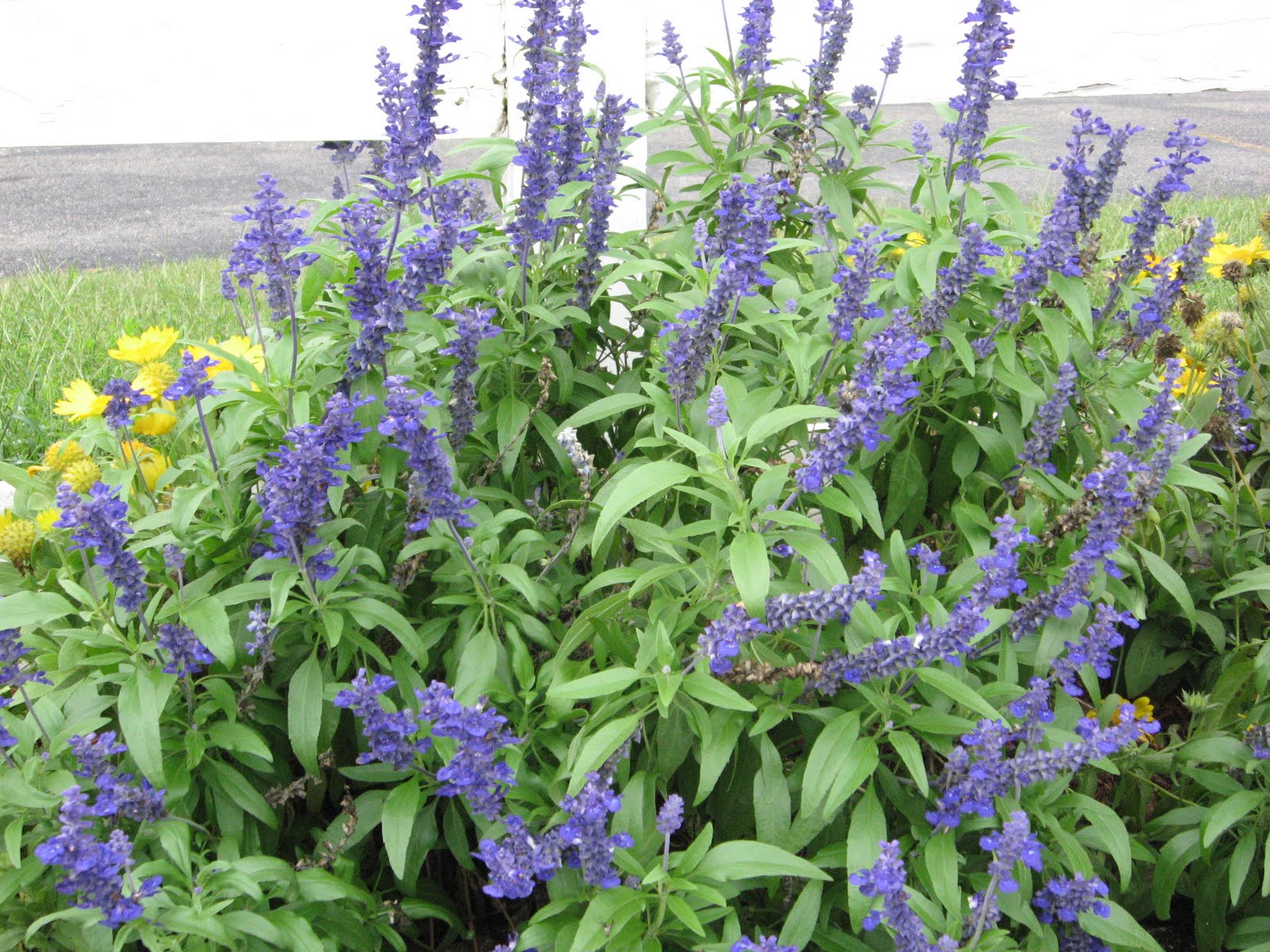
Annual Blue Salvia


Blue Salvia
Salvia farinacea 'Victoria Blue'

Annual Salvia makes an attractive display in your garden or container and comes in a variety of colors. All have the same general characteristics and likes and dislikes. I will refer to only the blue Salvia pictured above, which has been thriving all summer outside our greenhouse complimented by yellow Gaillardia.
The Victoria Blue Salvia pictured is a true blue color which is a highly sought color in many gardens. It grows 18-24" tall and wide, and the flower spikes can be as long as 8-10". The gray green foliage complements the flowers nicely, and this plant once established is quite drought resistant. Planted in a sunny location in well drained soil, this annual will provide you with masses of color all summer long and well into the fall. As with all annuals, fertilization at least once a week will keep them looking outstanding.
These beautiful blue flowers are very attractive to butterflies and hummingbirds, but not at all to deer, and do not have to be deadheaded to continue flowering. They really do stand out strikingly in the middle of a container planter with Lantana, Lysimachia, or Calibrachoa around the outside. For easy care, deer resistant, continuous blooming, bright blue color in your gardens or containers next year, try this variety and be amazed at the compliments you get from the neighbors.

By: Sandy Weinkam
A.J. Rahn Greenhouses

Friday, September 2, 2011

Annual Lantana


Lantana

Lantana plants are grown as annuals in zones 1-7, where they are quite prolific bloomers all summer long in full sun. They are very drought tolerant once established, and not picky about soil type as long as it is well drained. They come in a range of colors from reds, yellows and oranges, to pink, rose and lavender. For full plants with lots of blooms all summer, fertilize every week with a general purpose fertilizer, or a bloom booster formula.
These hard working, long blooming plants can be used as specimen plants, in containers, planted in masses, or some varieties are trailing and look great in hanging baskets. We have both varieties growing at the greenhouse, some in window boxes, others planted in flowing masses in our entrance garden and they are thriving! They attract lots of butterflies, but deer will avoid these plants completely, preferring more tender and tasty plants than Lantana. Customers who have fairly large herds grazing in their yards have told us the deer won't touch these plants, helping hold down frustration levels for our avid gardeners.

By: Sandy Weinkam
A.J. Rahn Greenhouses

Thursday, August 25, 2011

Cone Flower


Cone Flower
Echinacea

A real workhorse perennial in the garden, the coneflower will continuously bloom from late June until frost. New varieties now come in colors other than purple, ranging from many shades of yellow, pink to red, chartreuse, and shades of orange, as well as white. My favorite combination in terms of variety name, are the red Tomato Soup, and the very yellow Macaroni and Cheese. They sound good enough to eat! Height ranges vary from very short 6-8" varieties, to 18-24" types, making them very versatile in front or in the back of your perennial bed.
Cone flowers thrive in full sun, are very drought resistant once established, and faithfully return every spring fuller than the year before. Treated with a slow release fertilizer in early spring, your cone flower plant will be even more colorful and full than it would be if just left alone. They aren't picky about soil and will grow in most any type you may have, but as with all plants, do better in a richer well drained soil. Side dressings of compost in early spring will achieve both a better soil consistency and provide fertilizer at the same time! When establishing a new plant, keep it watered when dry until it really gets its roots set. This may take an entire season to accomplish, but well worth it for a very strong plant for many years to come.
Finches love the seeds in the center cone of these flowers, so don't deadhead them too soon, giving the birds a chance for a fresh treat. As with all fuzzy leafed plants, deer won't munch on them.

By: Sandy Weinkam
A.J. Rahn Greenhouses

Tuesday, August 16, 2011

August Lily


August Lily
Lycorus

The August Lily, blooming now in many gardens, has many common names by which it is known, depending on what part of the country it is growing in. Known as the Surprise Lily, the Magic Lily, the Naked Lily, or the Assumption Lily, as well as August Lily, this hardy bulb is very long lived. In my own father's garden, this flower has been showing off every year since he was a small boy, and he is now 86 years old! Each year the clumps multiply with more flowers, yet never take over and crowd out other plants.
In early spring, deep green strap-like foliage appears for 6-8 weeks, then dies completely to the ground. Not until early August do you see any activity in the soil where the foliage was, then almost like magic, the leafless 24" stem of the flower stalk appears, taking only about a week to reach full size and bloom! On each flower stalk are up to 8 lily like pink-lavender outward facing flowers. These will bloom for up to three weeks if the weather isn't too hot. They prefer sun to part sun, and may not bloom for a year or two if they are moved. Soil fertility doesn't seem to affect flowering, nor does fertilization seem to make a huge difference. Best of all they are deer and rodent resistant!
For years of easy care, beautiful flowers each August, this bulb is an excellent choice!

By: Sandy Weinkam
A.J. Rahn Greenhouses